KNX System Introduction: The Rock-Solid Wired Smart Home Standard
In the world of smart homes, if consumer wireless systems are flexible "special forces," the KNX system is a disciplined, rock-solid "regular army." Why do luxury villas, penthouses, luxury hotels, and modern airports consistently prefer KNX? Discover what makes this 30-year-old global standard the ultimate foundation for high-end automation.
1. What is KNX? (A Simple Definition for Beginners)
Imagine having dozens of devices from different brands in your home: lighting, motorized shades, HVAC, floor heating, ventilation, and security. If each spoke a proprietary dialect, the home would devolve into chaos.
KNX serves as the "Esperanto" and "United Nations" of the building automation world.
- Esperanto (Unified Standard): Whether it is Siemens, ABB, Schneider Electric, or Eelectron, as long as a device bears the certified KNX logo, they speak the exact same language and integrate seamlessly.
- United Nations (Open Ecosystem): You can use Brand A's artisan brass switch to control Brand B's dimming actuator and read Brand C's environmental sensor data. This is impossible in closed single-brand ecosystems.
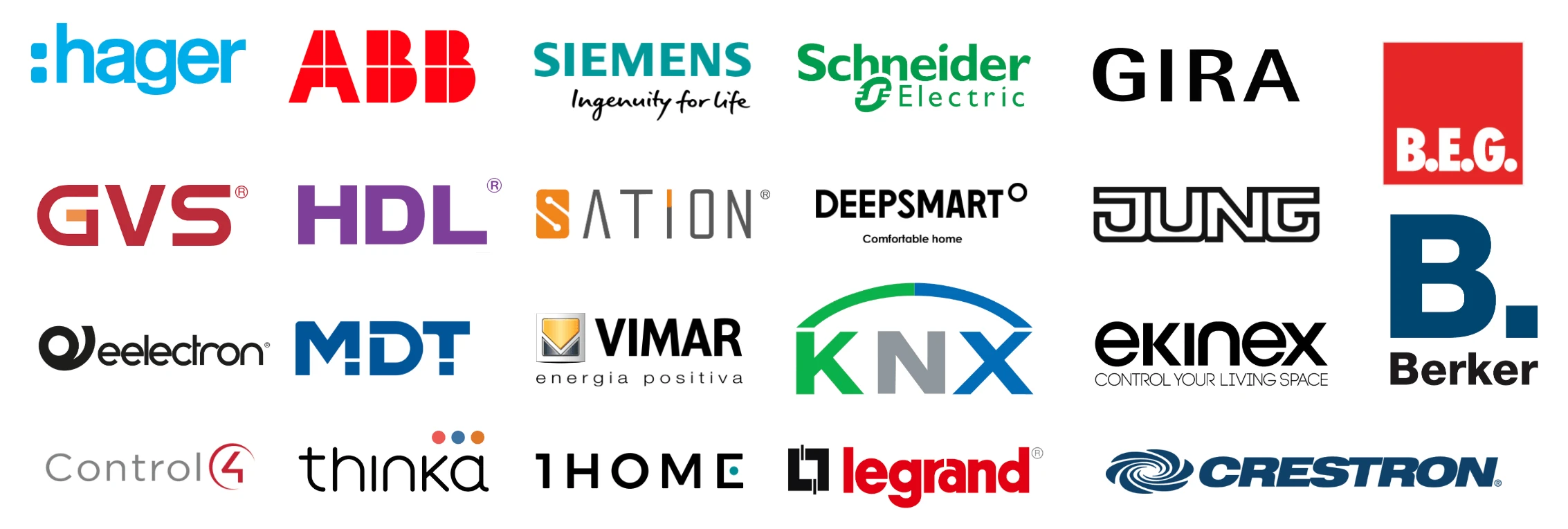 (The KNX Association has over 500+ member brands worldwide, offering you thousands of interoperable product choices)
2. Core Principles: Why is KNX so Exceptionally Stable?
The greatest frustration in smart homes is system lag or network dropouts. KNX delivers rock-solid, industrial-grade reliability through two fundamental engineering pillars: Physical Bus Wiring and Decentralized Architecture.
2.1 The Green "Blood Vessel": Dedicated Twisted-Pair Bus
The most iconic trademark of a KNX system is its green twisted-pair cable (TP cable).
Unlike wireless frequencies (Wi-Fi/Zigbee) vulnerable to concrete wall attenuation and RF interference, all KNX control commands travel across this dedicated physical bus line. Data and safe 29V DC power run through the cable with zero packet loss and lightning-fast responsiveness.
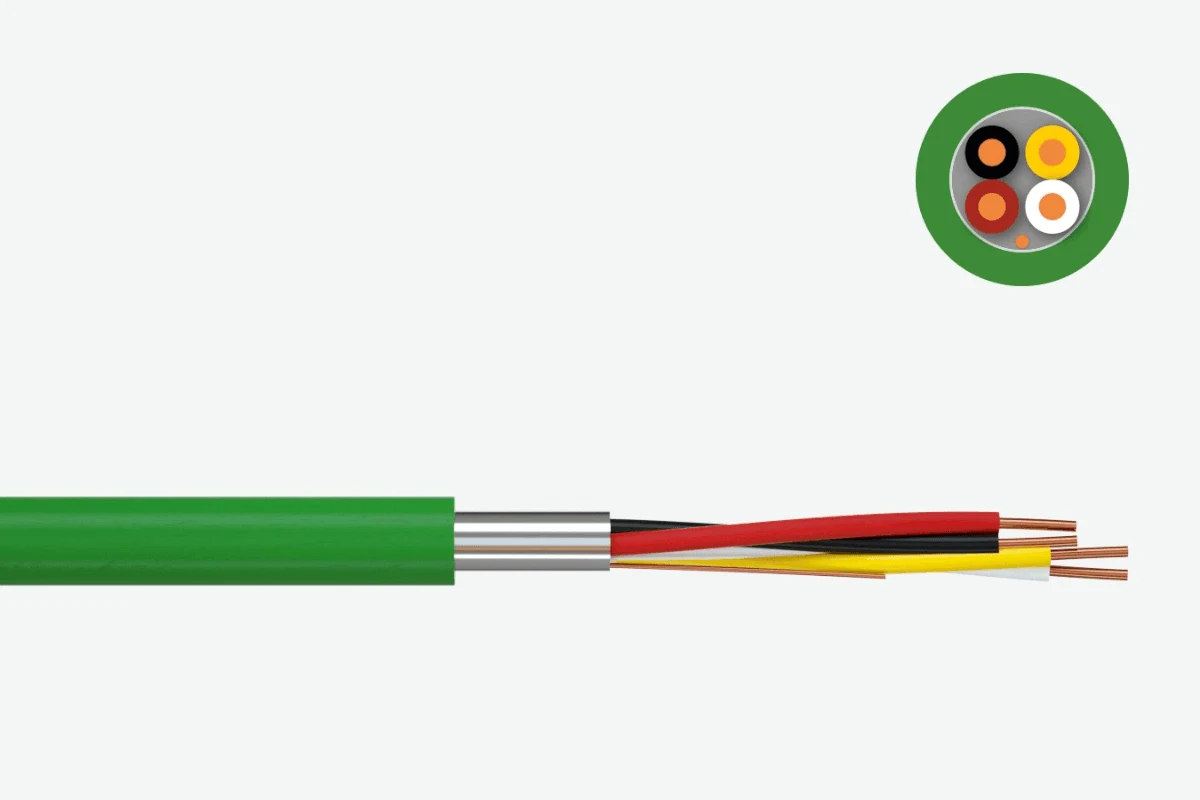 (The green KNX-certified EIB communication cable, featuring four-core twisted shielding for extreme noise immunity)
2.2 True "Decentralization": Zero Dependency on a Central Hub
This is the most crucial architectural advantage of KNX over standard smart home systems:
- Centralized Systems: Functions like a classroom solely reliant on a single teacher (central hub). If the hub crashes or freezes, the entire home is paralyzed—pressing switches won't even toggle lights.
- KNX Distributed Bus System: Functions like an elite team. Every keypad, sensor, and actuator houses its own dedicated microprocessor and flash memory. Even if a touch panel fails or the home network drops, every switch still operates lighting, and climate controllers maintain temperature seamlessly.
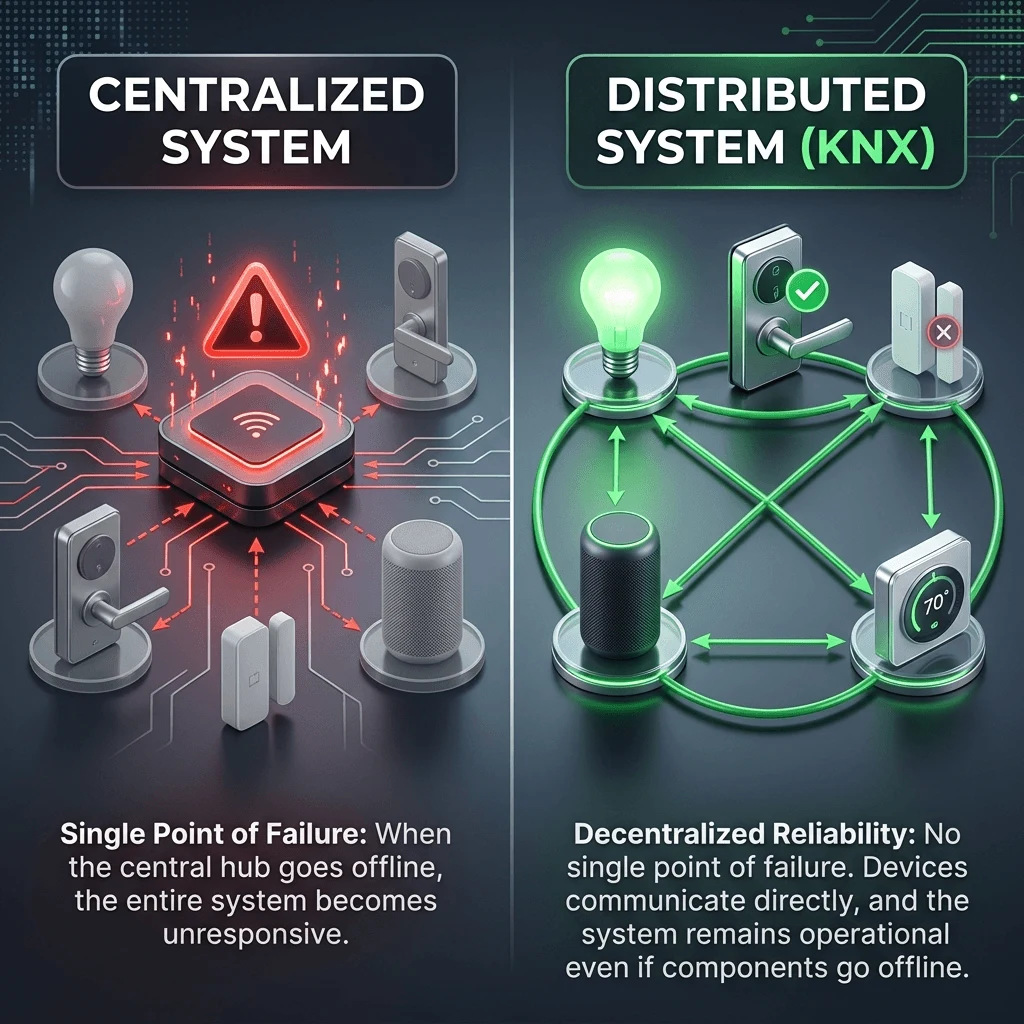 (Decentralized Bus Communication: Peer-to-peer execution directly between field devices with zero single point of failure)
3. System Components: An Anatomy of KNX Hardware
For homeowners, there is no need to master complex ETS engineering code. You only need to understand three core hardware categories:
3.1 Visible Interfaces: Input Devices
The elements you touch and experience every day, celebrated for exquisite aesthetics and luxury tactile feedback:
- Keypads & Touch Panels: Finished in solid aluminum, architectural bronze, or crystal glass with mechanical micro-switches or haptic feedback;
- Presence & Ambient Sensors: Millimeter-wave radar, illuminance meters, temperature, humidity, and VOC sensors acting as the home's "eyes and ears."
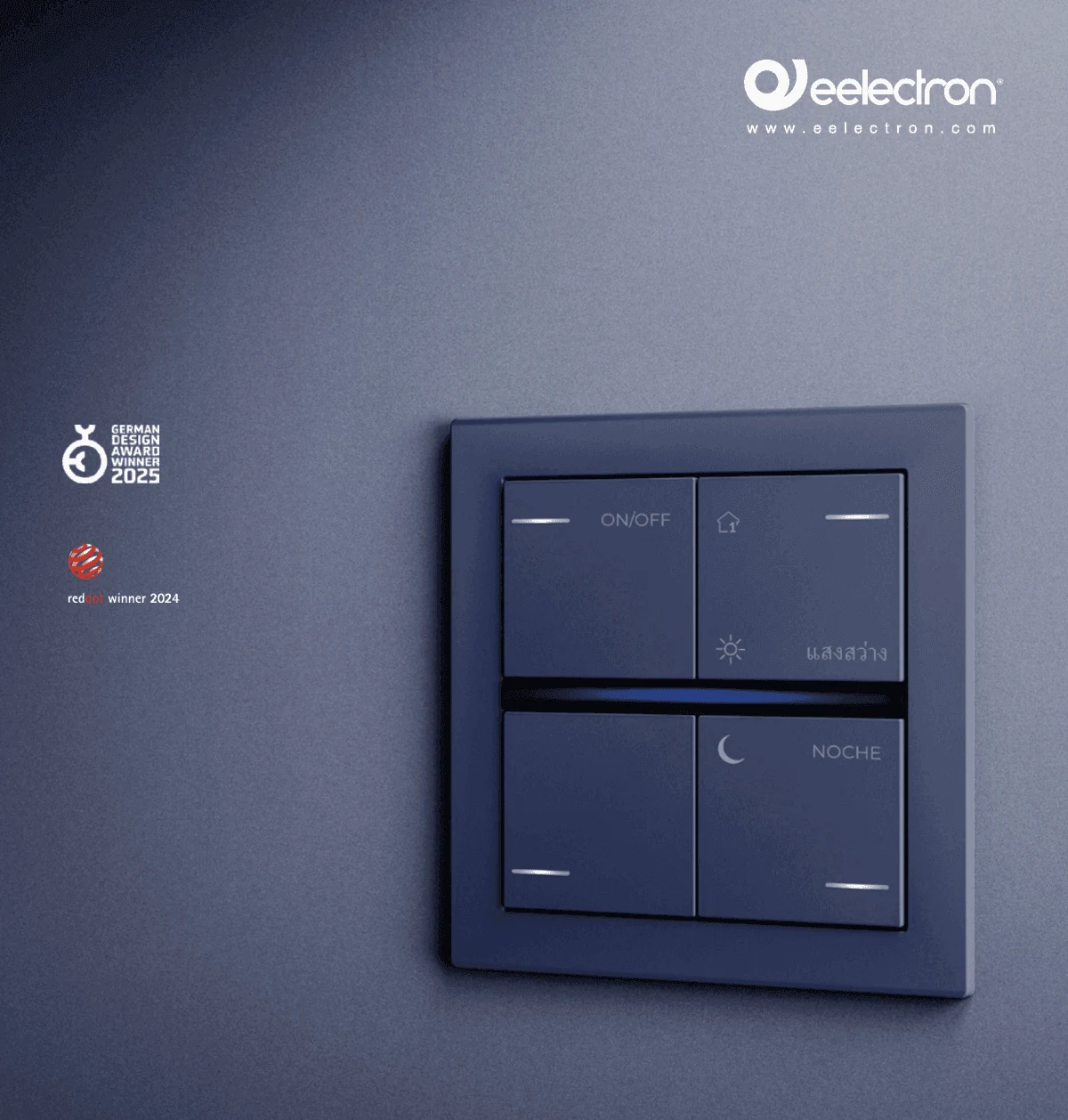 (Italian Eelectron Luxury KNX Smart Panel in a Modern Interior)
3.2 Cabinet Modules: Output Actuators
DIN-rail mounted units arranged neatly inside the electrical enclosure to execute the heavy loads:
- Switch Actuators: Manage power relays for all lighting circuits and high-power sockets;
- Dimming Actuators: Deliver high-precision 0-10V, trailing-edge, and leading-edge dimming;
- Shutter & Blind Actuators: Provide millimeter-accurate positioning for motorized drapery and Venetian blinds;
- HVAC Gateways: Interface natively with Daikin, Mitsubishi, Hitachi VRV air conditioning, and hydronic floor heating.
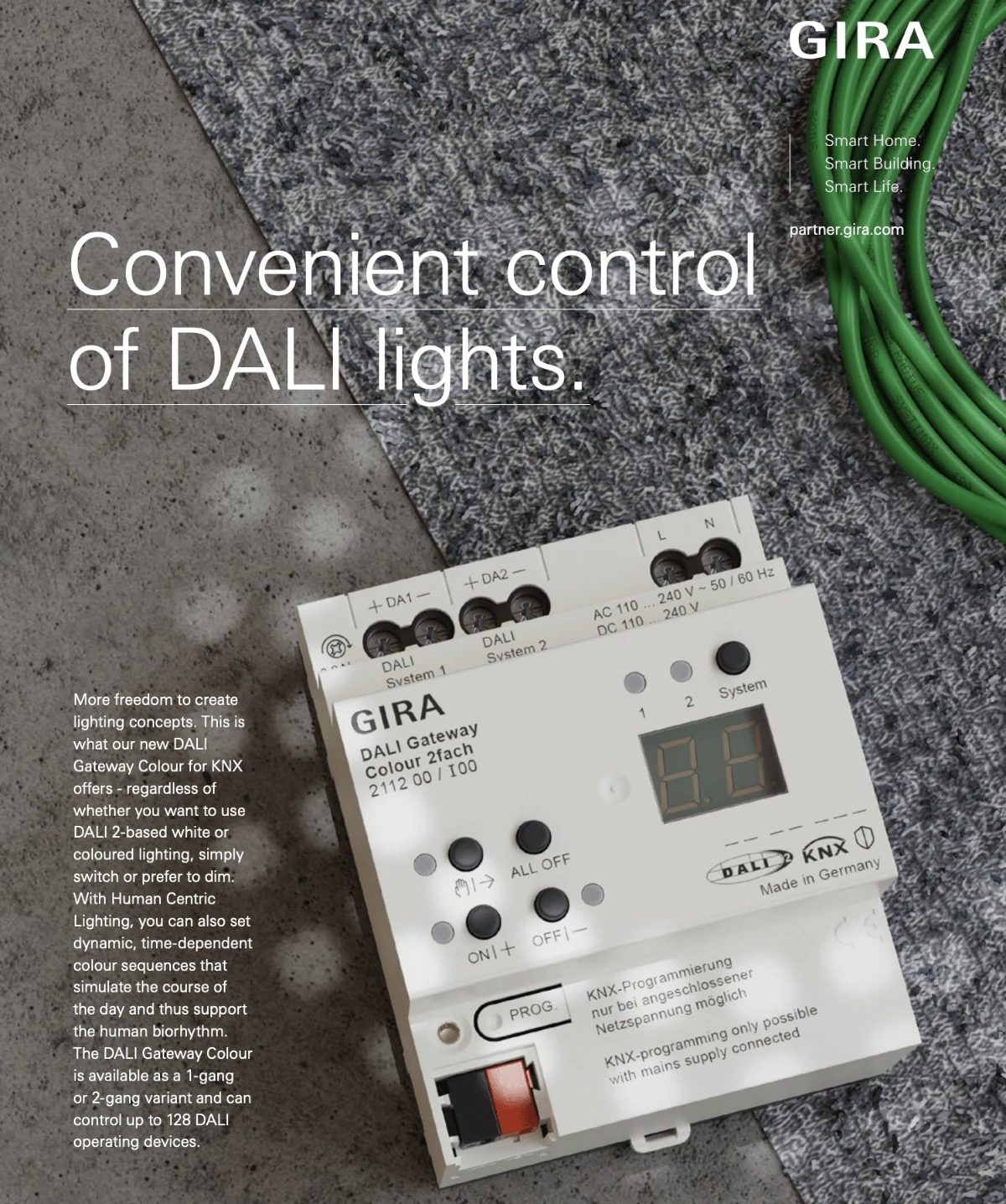 (German Gira Industrial-Grade KNX-DALI Gateway Module)
3.3 Backbone Modules: System Auxiliary Hardware
- KNX Power Supply Unit: The heart of the bus, delivering ultra-clean 30V DC filtered power;
- IP Router & Gateway: The bilingual bridge enabling mobile apps, Apple HomeKit, Siri, and Home Assistant integration.
4. Why Choose KNX? (Wired vs. Wireless Comparison)
| Comparison Dimension | KNX Industrial Wired Standard | Consumer Zigbee / Wi-Fi |
|---|---|---|
| Operational Stability | Extreme (Decades of continuous industrial uptime) | Moderate (Prone to router congestion and RF interference) |
| Brand Interoperability | Unmatched (500+ global brands interoperate freely) | Weak (Tied to proprietary closed ecosystems) |
| Pre-Wiring Requirement | Requires pre-wiring green bus cables during framing | Plug-and-play without dedicated control wiring |
| Hardware Lifespan | Building Lifetime (Designed for 20-30+ years) | Consumer Electronics Cycle (Typically 3-5 years) |
| System Cost | Premium (Industrial silicon, panel cabinetry, ETS commissioning) | Budget-friendly (Lower initial hardware investment) |
| Ideal Application | Luxury villas, estates, penthouses, high-demand clients | Rental properties, completed apartments, lightweight trials |
Integrator Insight:
KNX serves as the digital concrete foundation of modern architecture. Pre-wiring the green KNX bus during early renovation is the single most valuable decision to future-proof your residence for decades.
5. Global Real-World Scenarios
- Large Luxury Estates: Sprawling floorplans with hundreds of circuits suffer from wireless signal loss. KNX handles 1,000-meter line segments effortlessly with millisecond execution.
- Luxury Commercial & Five-Star Hotels: Airport VIP lounges, presidential suites, and ballrooms mandate 24/7 non-stop industrial reliability powered by KNX.
6. Frequently Asked Questions (FAQ)
Q1: Can I install a KNX system in a home that has already been decorated?
A: KNX is a dedicated wired bus system requiring green twisted-pair communication cables to be pre-wired behind walls during the framing/rough-in phase. If your home is fully completed without pre-wiring, we recommend wireless standards such as Matter over Thread.
Q2: How long does a KNX system last? Is maintenance difficult?
A: KNX hardware employs industrial-grade flame-retardant materials and high-spec chips designed to match the building's lifetime (20–30+ years). Because of its distributed architecture, a single faulty device never impacts the rest of the home, and replacement keypads from any of the 500+ member brands can be installed effortlessly.
Q3: Can KNX integrate with Apple HomeKit, Siri, or mobile apps?
A: Yes, seamlessly. By integrating certified KNX IP routers or gateways (such as 1Home Server), your KNX backbone bridges natively into Apple HomeKit, Siri, Home Assistant, and smartphone apps, combining industrial wired resilience with modern mobile ergonomics.
Q4: What is the relationship between KNX and DALI lighting?
A: They form the "Gold Standard" of architectural lighting. KNX orchestrates whole-home logic, occupancy automation, and HVAC, while DALI (Digital Addressable Lighting Interface) manages micro-level 0.1% flicker-free dimming and tunable white scenes. A KNX-DALI gateway unifies them into a cohesive lighting masterpiece.
Q5: Why is the upfront cost of KNX higher than wireless smart homes?
A: KNX is an industrial-grade building infrastructure asset. Each module contains dedicated microprocessors and bus transceivers, housed in structured distribution enclosures and programmed by certified KNX Partners via ETS software. It represents a permanent capital enhancement to the property rather than a disposable gadget.
Q6: What end-to-end services does TOP Smart Home provide for KNX projects?
A: With 14 years of smart system integration experience and certified KNX engineering staff, TOP Smart Home delivers complete turnkey services spanning CAD schematic design, on-site pre-wiring supervision, precision electrical panel assembly, ETS programming commissioning, and lifelong maintenance support.
7. Summary: An Investment in Infrastructure
KNX is not merely smart home hardware; it is the digital infrastructure of your residence. The moment the green KNX bus is embedded within your walls, you establish a solid bedrock for the next 20 to 30 years. Pair it with architectural brass keypads today, and ten years later, refreshing to a new aesthetic requires only swapping faceplates—the underlying wiring remains timeless.
Planning a luxury residential build or commercial project? Contact TOP Smart Home's certified specialists today for a tailored intelligent home consultation!
📚 Related Technical Articles
 ✓
✓Dadao
Technical DirectorKNX System Certified Engineer16+ years of engineering experience in KNX / Control4 and luxury villa smart low-voltage infrastructure. Specializing in KNX, Control4, Apple HomeKit, and Matter ecosystems.